Finish the dark poems you keep abandoning at 3 AM
Seven days. Seven finished poems. Permission to write what scares you — no toxic positivity, no spiritual bypassing, just technique.
Join the waitlist →
You don't need another prompt about gratitude or healing
You're already writing in the dark hours.
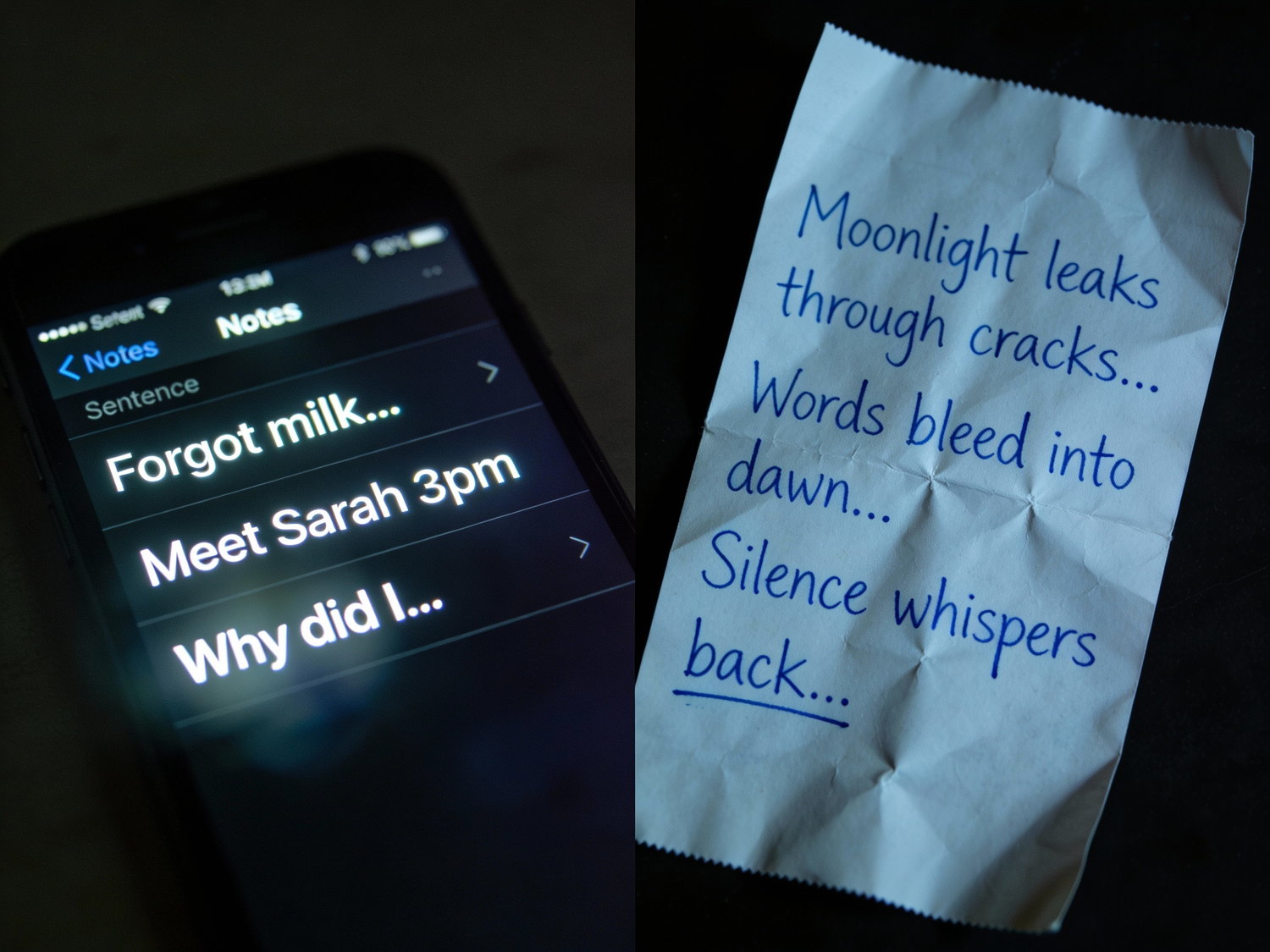
Scattered fragments at 2 AM. Powerful lines you'll never finish. Truths too raw to organize into something complete.
The problem isn't lack of ideas. The problem is you've been trained to make darkness palatable — to soften the blow, to wrap pain in pretty metaphors that protect everyone from what you're actually trying to say.
Most workshops want you to
- Write toward the light (before you've mapped the shadows)
- Find the lesson (before you've felt the wound)
- Make it beautiful (before you've made it true)
This workshop does the opposite
- For seven days, we stop sanitizing. We get specific about pain instead of vague about "healing." We document darkness with surgical precision.
- Not because suffering is noble — because precision is what makes readers gasp.
Actually finish your poems instead of writing words you'll never see again, using simple and specific guided frameworks.
Discover five thematic techniques that turn your pieces into work that moves people.
Receive specific guidance on how to construct each poem from scratch.
Learn the classic techniques developed by dark poetry masters and still used by published poets today.
Confidently turn your thoughts and life experience into emotionally resonant work.
You stop being a fragment collector
Right now, you have a notes app graveyard. Voice memos you'll never listen to again. Journal pages that felt true at midnight and embarrassing by morning. Beautiful starts. No endings.
The next time a line hits you at 3 AM, you won't just scribble it down and hope for the best. You'll open the framework, sit down, and forty minutes later have a finished poem in front of you.
Those notebooks full of half-starts and abandoned stanzas? You'll flip back through them and find finished poems hiding in what you'd written off as failures.
You build a darkness vocabulary that's yours
"Pain." "Broken." "Empty." These words have been drained of power. You've written them a hundred times. They don't land anymore — not for you, not for readers.
You'll read back your own poem and barely recognize the person who wrote it — because instead of "I felt broken," you wrote "the specific weight of my grandmother's rosary beads that I pawned for pills."
When you share that poem with someone you trust, watch their face. They won't say "that's nice." They'll go quiet. That's how you know the words are yours now.
You know where your darkness lives
Emotions don't live in your head. Grief lives in your throat. Anxiety in your chest. Shame in your stomach. But where does your specific darkness live?
You'll have a hand-drawn map of your body with your darkness marked on it — and a poem written from one of those locations that's more honest than anything you've produced writing from your head.
People won't just understand your poems. They'll feel them in their own chest, their own jaw, their own hands.
You document love's crime scenes without drowning
Toxic love doesn't hurt aesthetically. It hurts specifically. Finding their hair in your shower drain three months later. Deleting photos at 3 AM, then searching your trash folder at 4.
You'll have a finished poem about someone who wrecked you — written using only facts, no metaphors — and when you read it back, you won't spiral. You'll think, "I made something out of that."
The relationship you've been avoiding writing about becomes a poem you can hold in your hands. Not therapy. Not closure. Proof you survived it.
You understand your inheritance
Some darkness doesn't start with you. The alcoholism that skips generations. The depression running through maternal lines. The violence fathers teach sons without meaning to.
You'll have written a letter-poem directly to an ancestor whose shadow you've been carrying — and it will say the thing you've rehearsed in your head a hundred times but never put on paper.
What you thought was your personal failure, you'll see on the page for what it actually is: inherited. Not absolution — clarity.
You revise for danger, not approval
Anyone can bleed on the page. That's not poetry — that's a diary entry. Poetry happens when you take that blood and make art from it. When you control the blade.
You'll take a raw draft, cut every line that explains instead of shows, and watch the poem go from "pretty good" to "I can't believe I wrote this."
When your hand moves to soften a line — to add "but I'm okay now" — you'll recognize that impulse for what it is: fear. And you'll delete the softening.
You hold contradiction without needing resolution
Darkness and light aren't opposites. They're partners. They define each other. Your pain gave you language. Your shadows gave you depth.
You'll have written a poem where two incompatible truths sit side by side — without flinching, without explaining, without a hopeful ending.
Every time you pick up a pen after this, you'll approach your darkness differently: not as a problem to solve, but as material you know how to map, shape, and finish.
The identity shift
This is the part that's hard to promise, because it happens differently for everyone. But here's what tends to shift.
One lesson.
One exercise.
One day at a time.
- When doors open — the waitlist gets the first invite. Day 1 unlocks the moment you enroll.
- Every 24 hours — a new lesson unlocks with teaching and an exercise.
- Seven days total — a complete arc from permission to integration.
- Lifetime access — every lesson stays yours. Return to it whenever the fragments pile up again.
Each lesson includes
- Clear teaching — what and why
- One focused exercise, 20–45 minutes
- A worked example from my own writing
- Honest reflection prompts
What you won't get
- Vague prompts about "feelings"
- Quotes with flower borders
- Pressure to share publicly
- Pushes to "find the light"
Techniques for writing poetry that doesn't apologize for being complicated.
I
Day OneYour Darkness Permission Slip
→
Write the thing you swore you'd take to the grave. No metaphors. No imagined audience. Just you, the page, and the truth you're afraid to say out loud.
The exercise
II
Day TwoThe Word That Changes Everything
→
Build your personal darkness dictionary. Stop writing "pain" and start writing specifics.
The exercise
III
Day ThreeWhere Grief Lives in Your Body
→
Map exactly where your darkness lives physically. Write from that location, not about it.
The exercise
IV
Day FourLove That Breaks Things
→
Document love's crime scene. No feelings, just facts. Let the evidence create the feeling.
The exercise
V
Day FiveWhat Your Grandmother Couldn't Say
→
Excavate inherited darkness. Write to — or from — an ancestor whose shadows touched yours.
The exercise
VI
Day SixMake It More Dangerous
→
Take your raw poems and sharpen them into weapons. Cut every explanation.
The exercise
VII
Day SevenThe Dance Begins
→
Discover how darkness and light aren't opposites but dance partners.
The exerciseI spent fifteen thousand dollars in therapy learning to map my darkness. You shouldn't have to.
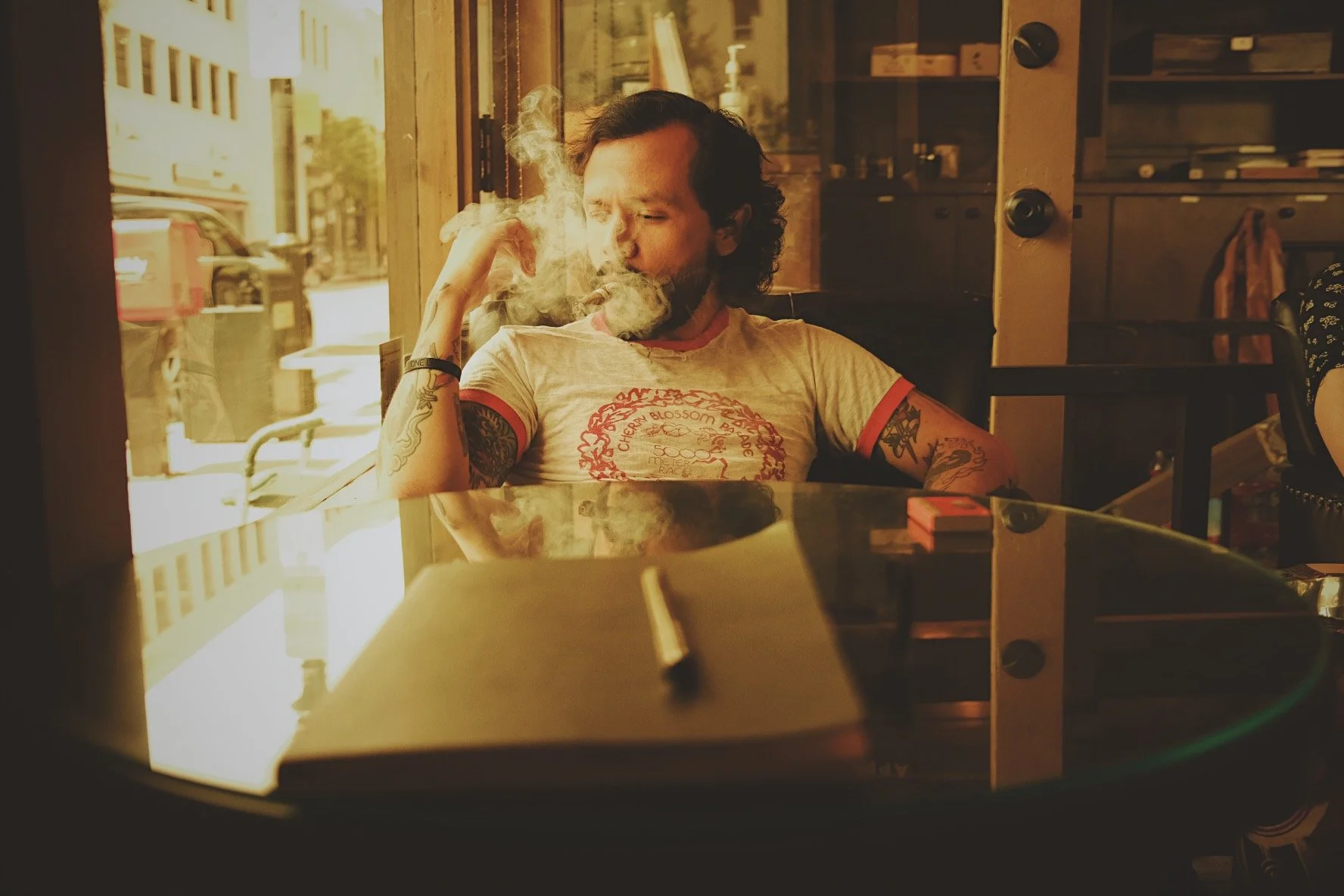
I've written poems about buying cocaine from my grandmother at 14. About overdosing in a girlfriend's shower at 19. About the specific shape of grief when someone you love is also someone who hurt you.
I know what "too dark" feels like.
For years I had the same problem you have: fragments everywhere, nothing finished. Voice memos recorded at 2 AM I'd never listen to again. Journal pages I couldn't turn into anything.
Then I learned what the darkness actually needed. Not softening. Not hope. Not a redemption arc.
Structure that serves the shadow instead of trying to fix it.
I spent a decade as a professional copywriter, working with agencies whose clients included Tony Robbins and other household names. In my first year freelancing I was featured as a case study in the Harvard Business Review. I know how to turn words into something that lands. But the dark poems stayed unfinished until I figured out they needed different rules.
This course is those rules.
After a year of intensive therapy — where my therapist had me write, not talk about, write my emotional patterns — something shifted.
When you write "I'm in pain," your nervous system yawns. When you write "the specific weight of my grandmother's rosary beads," your body remembers. That's the difference between journaling and poetry. Between venting and craft.
Seven days. Seven exercises. The frameworks that create pattern interruption where vague journaling hits its limit.
The core workshop
- Seven daily lessons
- Teaching built for dark poets specifically
- Writing prompts designed for darkness, not light
- Revision exercises that shape without softening
PDF — The Dark Poet's Toolkit
- 50 prompts for dark poetry — grief, rage, depression, existential dread
- A revision checklist built specifically for dark poems
- How to know a dark poem is finished (it's not when it's hopeful)
The Dark Poet's Finishing Framework — with lifetime access
A repeatable method for turning fragments into finished poems. Use it for these seven poems. Use it for the next hundred. The lessons don't disappear — repeat the course whenever your fragments pile up again.
Yours to keep, no matter what.
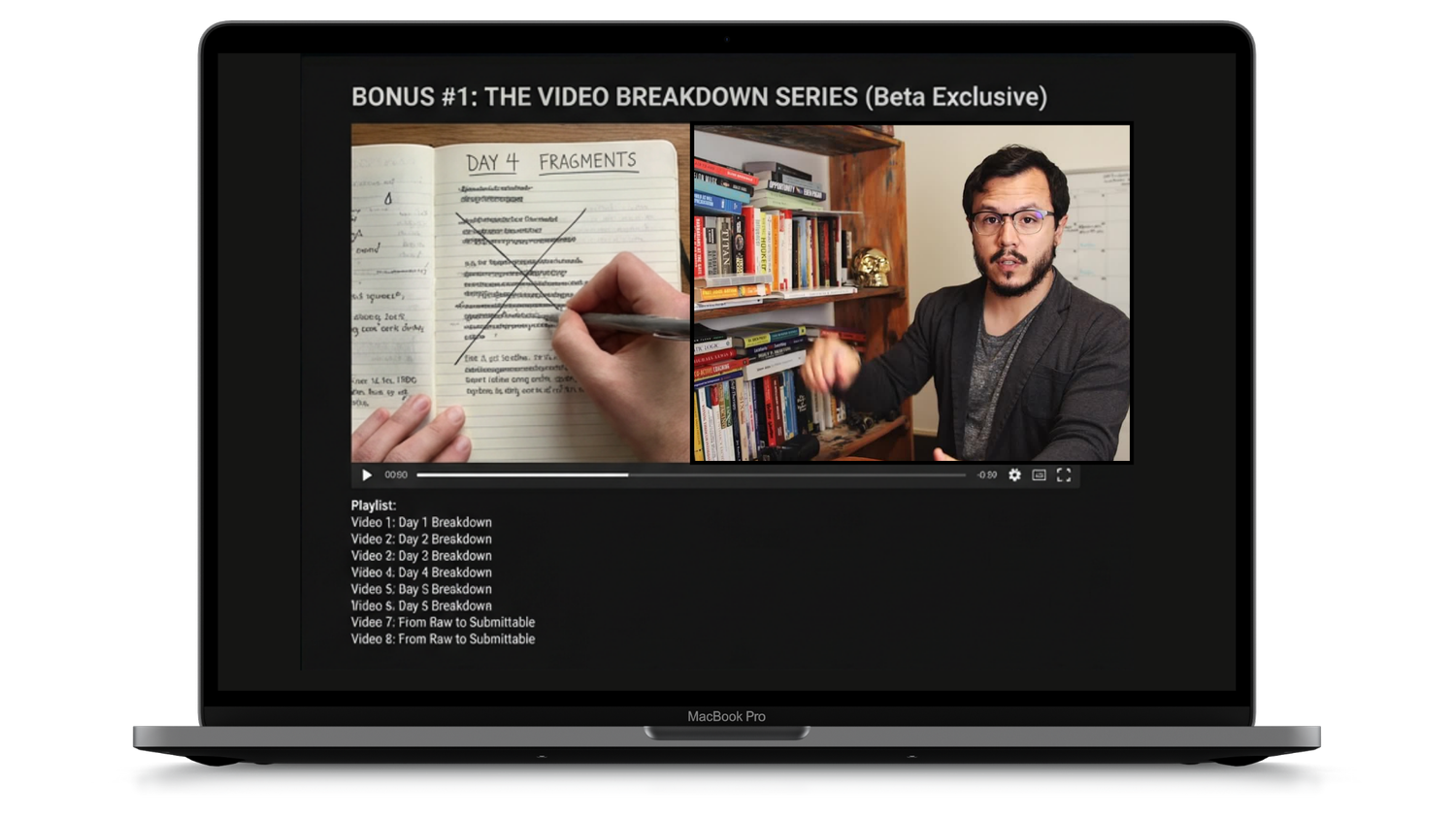
The Video Breakdown Series — beta exclusive
Eight videos showing exactly how the work gets done.
Here's what most courses won't do: show you the mess. In these videos I walk through my actual work from each day of the course — the fragments, the failures, the moment the poem finally clicked.
- Days 1–7: breakdowns of my teacher examples — what worked, what I cut, and why
- Day 8: watching me turn raw material into submittable poems
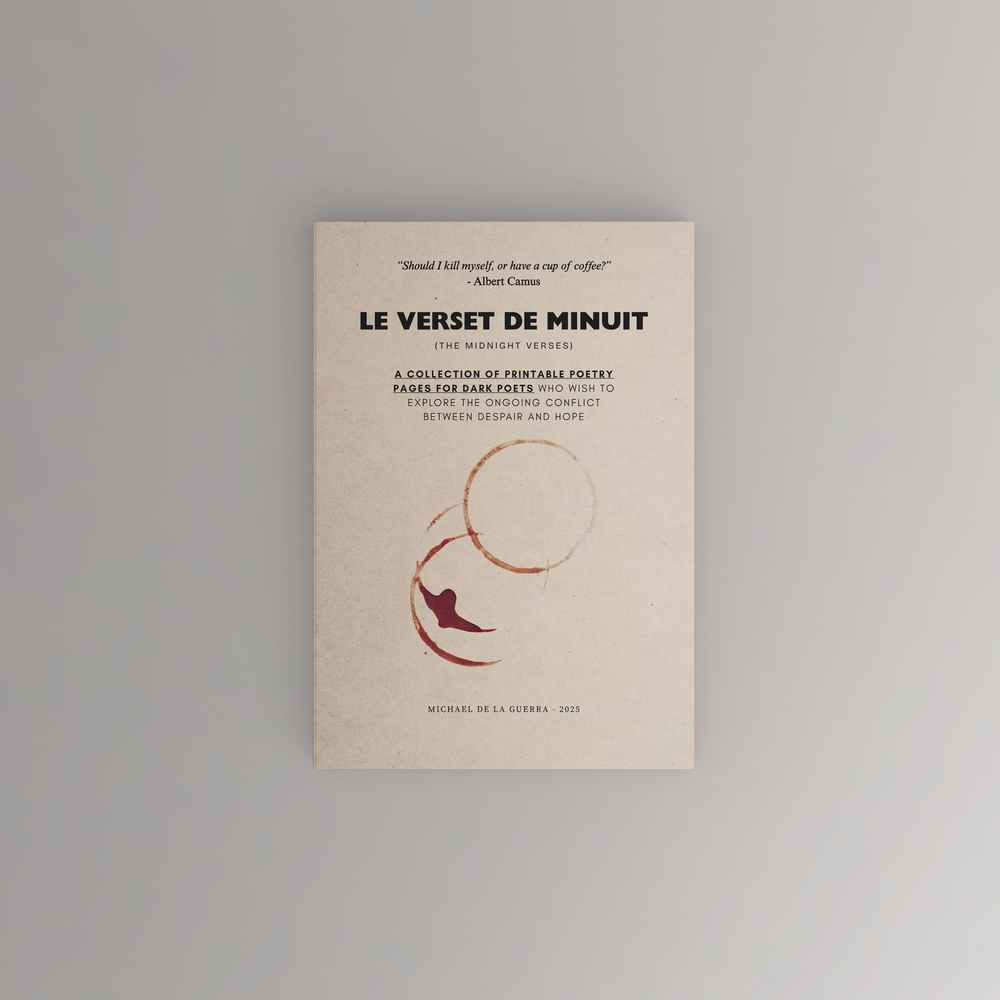
Le Verset de Minuit — the dark poet's journal
Twenty printable pages for finishing poems after the course ends.
- Embrace Your Incongruity — holding contradictions
- Discover Profound in the Mundane — turning coffee into cosmos
- Unmask the Immorality of Virtue — when qualities cast shadows
- Confront Inescapable Mortality — conversations with the inevitable
Dark Poetry Techniques of the Masters
Ten exercises pulled from poets who mapped this territory first.
- The Dickinson Dash
- The Plath Mirror
- The Celan Compression
- The Bishop Restraint
- The Siken Repetition
- Plus five more
Banned & Censored Poems
A breakdown and analysis.
Why authorities feared these poems — and what that teaches you about power. Ginsberg, Plath, Brooks.
Building Your Collection
A curated reading list for 3 AM.
Foundational texts, contemporary darkness, war, madness. Your library becomes an arsenal.
The core workshop
- Seven daily lessons — teaching, prompts, exercises
- The Dark Poet's Finishing Framework, reusable forever
- PDF: The Dark Poet's Toolkit
- Lifetime access
The beta bonuses
- Eight-video breakdown series, beta exclusive
- Le Verset de Minuit printable journal
- Dark Poetry Techniques of the Masters
- Banned & Censored Poems analysis
- Building Your Collection guide
For dark poets who choose coffee and keep going
Best suited for
- Midnight writersPeople who do their best work between 11 PM and 4 AM, when the world quiets and truth gets loud.
- Therapy veteransWriters who've done enough inner work to know that awareness without craft is just expensive self-consciousness.
- Honesty seekersPoets tired of courses that want them to "find the light" before they've mapped the shadows.
- Fragment collectorsAnyone with notebooks full of powerful lines they can't organize into finished poems.
Who this isn't for
- People looking for healing through poetry — valid, just a different course
- Poets who want their darkness to "lead somewhere positive"
- Anyone who thinks dark poetry is just a phase writers go through
- People who need community accountability to finish things
- Poets looking for a publication strategy
"Day 3 broke something open I didn't know was stuck. I've been writing 'I feel empty' for years. Now I write 'abandoned by my own heart and bones.' That changed everything."
"The 'Never Show Anyone' poem from Day 1? I showed it to my therapist. She said it revealed more than six months of sessions."
"Finally, a course for people who aren't trying to heal their inner child. Just finish the damn poem."
Less than one therapy session to process why you can't finish your poems.
I would have paid $500 for this method back when I had fragments everywhere and nothing finished. It's $47 because I'd rather dark poets have it than not.
Doors aren't open yet. Join the waitlist and you'll get the first invite — at the beta price — when they are.
You'll finish at least three poems.
Follow the course. Do the work. If you don't finish at least three poems from your existing fragments in seven days, email me for a full refund.
Your darkness stays dark.
This course will not ask you to soften, heal, find hope, or end on redemption. If any prompt pushes you toward light you don't feel, I've failed — refund guaranteed.