Art, Addiction,
& Academia
Artist Michael de la Guerra on the arithmetic of emotional contradiction and the hidden cost of self-discovery.
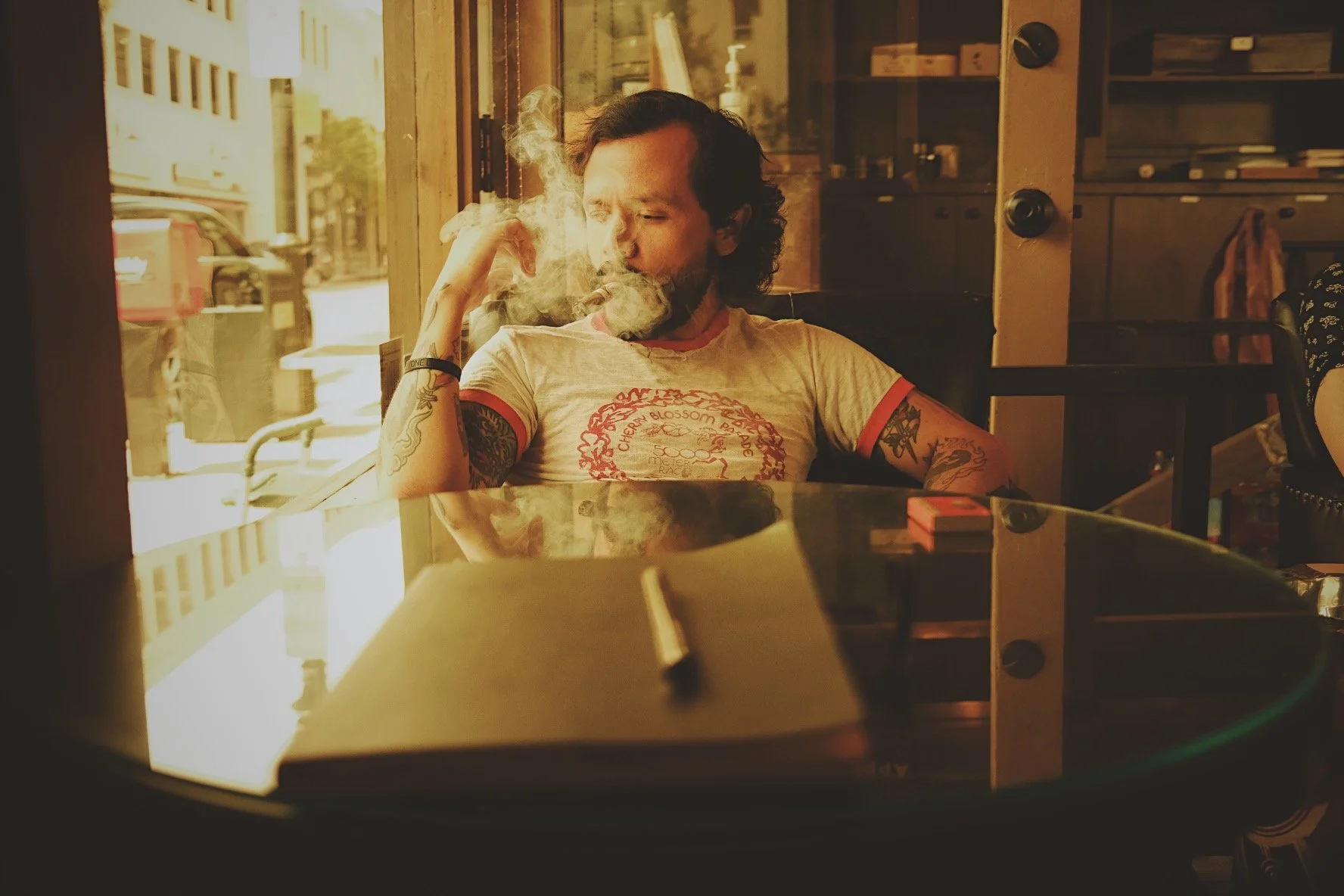
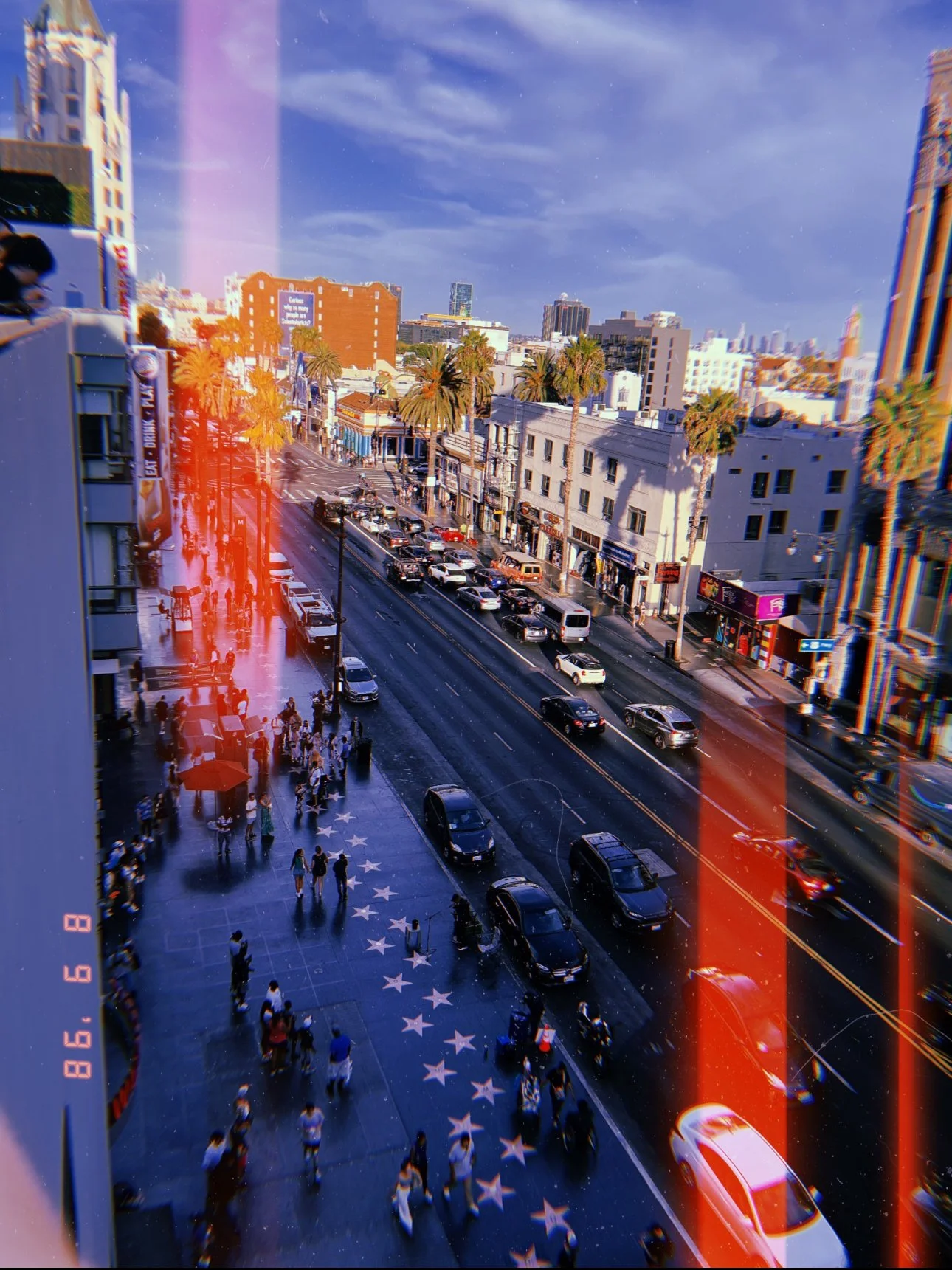
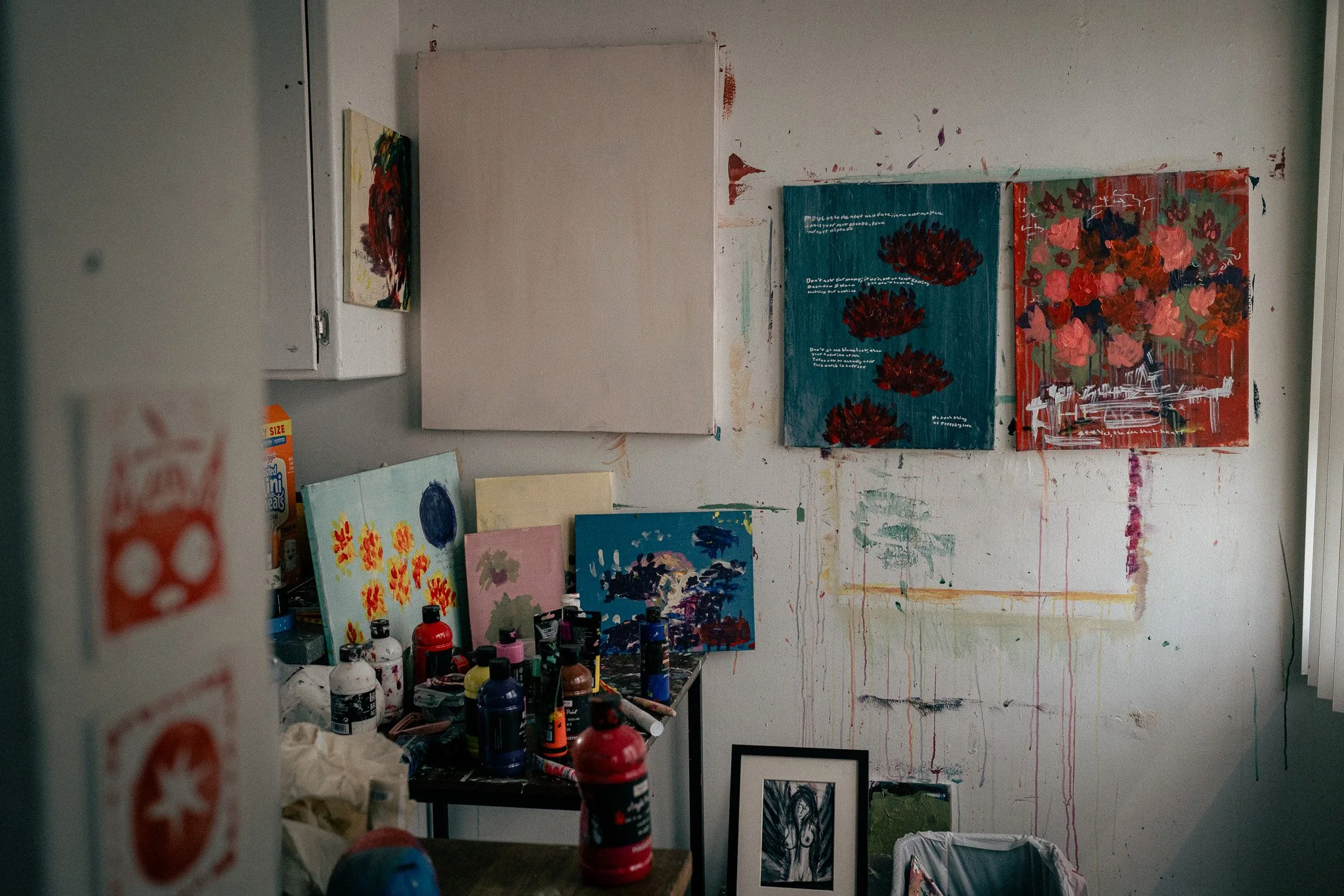
Michael de la Guerra chose a studio in Hollywood because "a bit of urban decay is good for inspiration," he says. The neighborhood obliges.
His building shares a wall with the historic Roosevelt Hotel: every night, its neon sign burns scarlet into the sky, bright enough to flood his creative fortress of solitude. Spare paintings and books line the floor where he builds visual and written work meant to map the distance between who we are in public and who we are alone with our ugliest truths. But he wants you to know up front: he is not a tortured soul performing darkness for effect.
"If I could choose how people perceive me," he says, "I'd want them to think I'm dumb. That way I don't have to work so hard to sound smart."
 Unglamorous curses and afflictions
He grew up surrounded by addiction and mental illness. "The kind you learn to navigate before you're tall enough to see over the kitchen counter," he says. By the time he reached young adulthood, the same afflictions that shaped his childhood had come for him directly. He dropped out of college at nineteen and checked into rehab. At the time of this writing, he's been sober for sixteen years.
He rarely leads with this anymore. He's tired of talking about the addiction. And he distrusts any narrative that treats it as the interesting thing about him. The interesting thing, he believes, is what you build with the life you steal back.
The arc of years that got taken awayHe burned through careers between rehab and now. The music industry came first: platinum artists, Grammy winners, the whole Los Angeles entertainment cliché he once chased. And he hated it. So he left.

Marketing came next and held him for nearly a decade. He ghostwrote for NFL players. He put words in the mouths of bank CEOs. He ran campaigns for Fortune 500 brands he's still barred by NDA from naming. Harvard Business Review ran him as a case study. Fast Company and The Wall Street Journal quoted him as an expert. And he pulled all of it off without a degree.
The degree part matters now more than it should.
He works at one of Los Angeles's top-ranked research universities and watches eighteen-year-olds move through the formative academic experience he was robbed of by a generational curse of addiction.
"It used to really eat me up," he says. "I always felt inadequate because drugs and their environmental residue consumed so many of the formative moments in my youth and young adult life. I finally made peace with it all, though. Now I can look around at all the young people and just be happy for them."
The institutions that symbolized exclusionary shame now employ him. And the creative work he once handed over to others, he keeps. His artistic output, he reports matter-of-factly, has never been stronger.
"An unexpected full-circle moment," he says. "Considering I almost didn't make it through the last several years."
The collapse arrived slowly. He wrote copy all night for other people, then wrestled with his own creative projects in whatever hours remained. The bandwidth ran out. Depression moved in. Dark thoughts about whether he still enjoyed existing followed close behind.
"It led to a very serious mental health episode," he says. "I walked away. My life depended on it."

The logical next moves would have swallowed him whole. Start an agency. Go independent as a consultant. Build a machine that demanded the rest of his life. He picked a quieter door instead, rented a studio in Hollywood, took a job in academia that wouldn't deplete his creative reserves, and wrote himself one rule: no more giving his artistic energy to anyone but himself.
He hasn't second-guessed it.
Massacring impulses and a messy creative romanceWriting had always been his strongest form of expression. But he burned out on it. He wrote poetry to keep the lights on upstairs — no deadlines, no word counts, no one else's vision to serve. Design followed, sharpened over a few years into the minimalist aesthetic that now anchors his visual work. He cheerfully admits this may have been, at least in part, an elaborate avoidance strategy.
"I joke all the time that spending the last several years studying art and design was just a way for me to avoid writing," he says. "And perhaps it was."
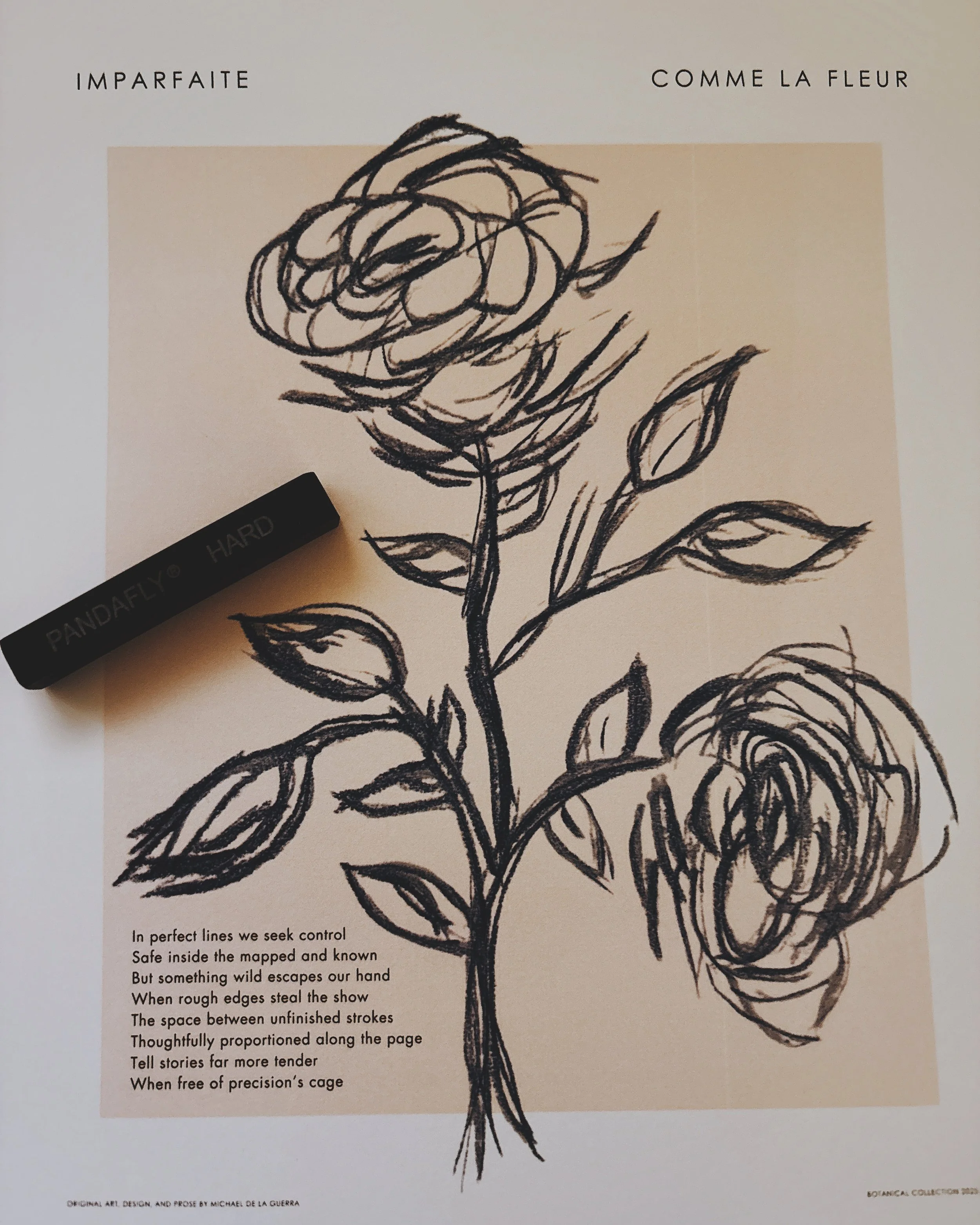
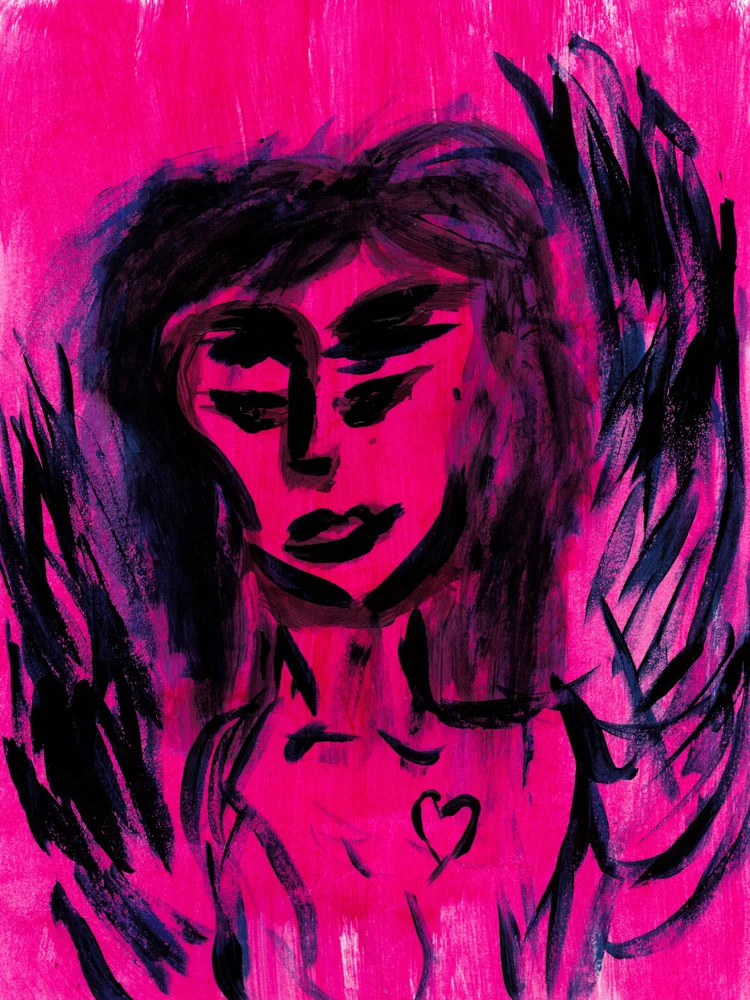
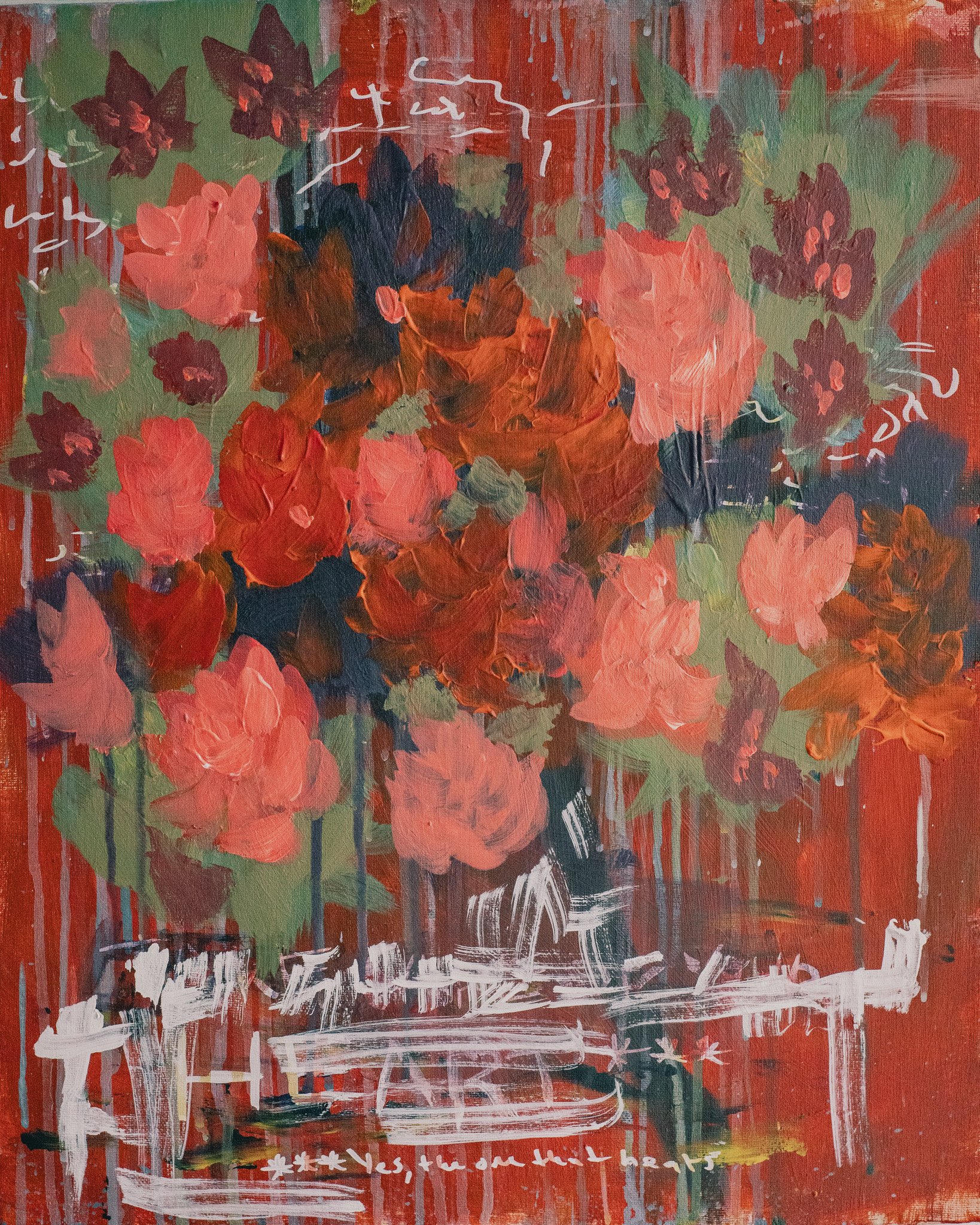
What arrived through the avoidance turned out more coherent than either medium managed alone. He started with editorial prints that paired poems with spare visual design. Painting followed. The three media eventually coalesced into one practice: unraveling, as he puts it, the messiness of uncomfortable human truths through painting, visual design, and written prose simultaneously.
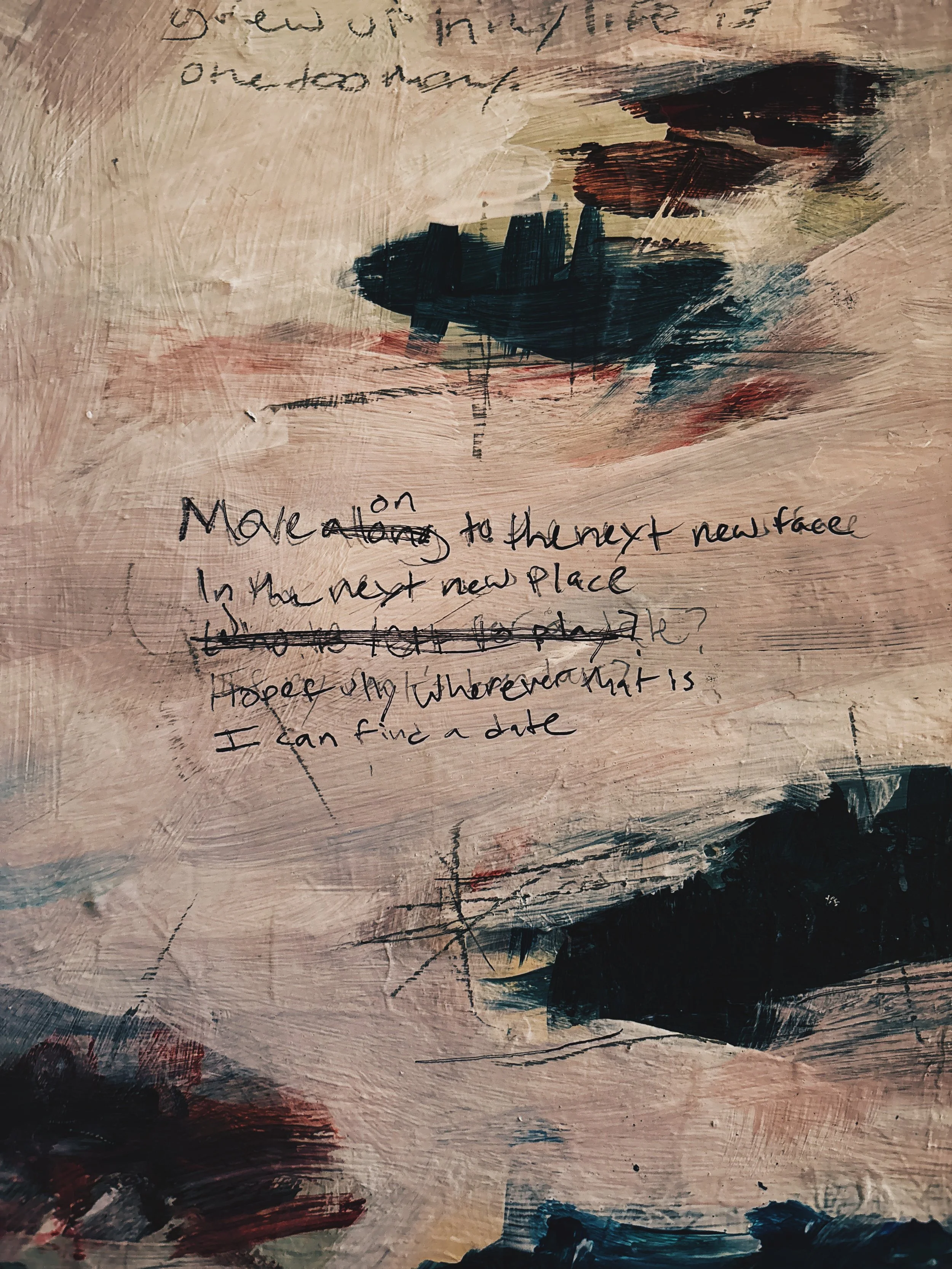
Minimalism has neurological roots. He has ADHD, untreated for most of his life, and a minimally designed object is one of the few reliable ways to quiet his mind. Making minimalism, however, is another story.
"Trying to create minimalism is antithetical to how fast thought moves through my mind," he says.
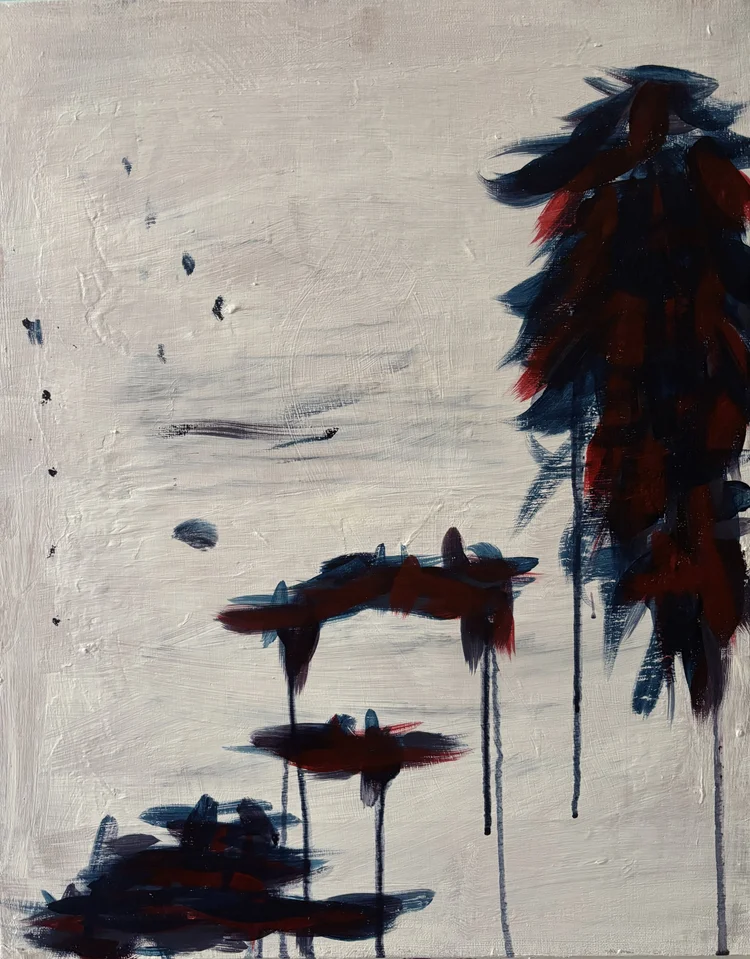
What minimalism actually means for him is the practice of restraint. Poetry drilled brevity into him through repetition. In painting and design, he restrains himself through line, color, and negative space — his way, he says, of stopping his impulses from massacring the composition.
The decade in marketing nearly broke him. It also educated him; he quickly learned fear and shame move product. But insight into social influence and persuasion also taught him that the most effective version of leverage wasn't manipulation. It was validation: the acknowledgment that what someone feels is real, and that in those feelings, they are not alone.
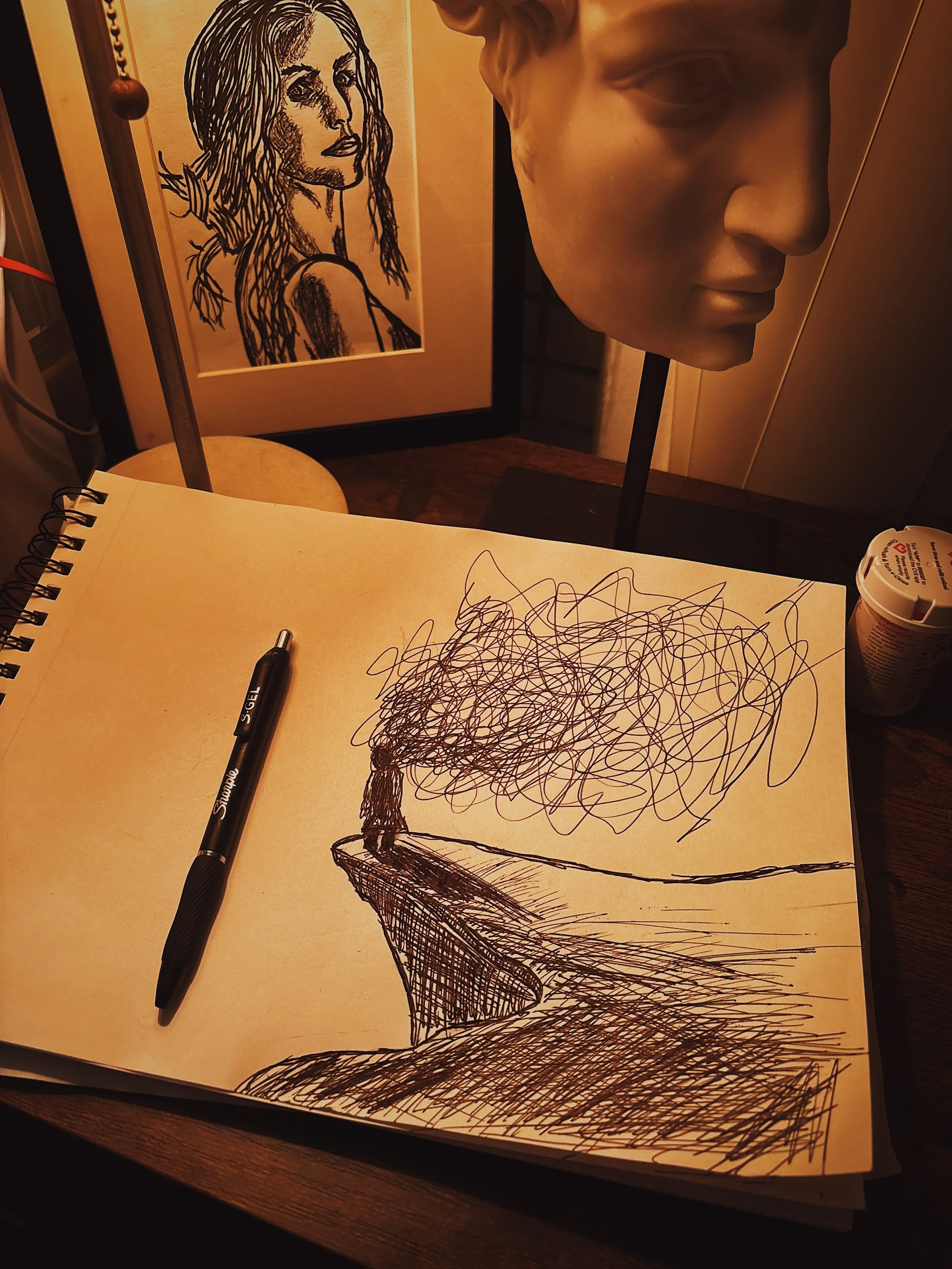
This instinct toward human connection is one of his most potent artistic throughlines: the poems, the prints, the paintings — each piece, he says, is created and shared in the hopes it might reach someone and make them feel less alone.
And he achieves this by spotlighting vulnerable moments of hopelessness and grief — scenes of life's casual human cruelties.
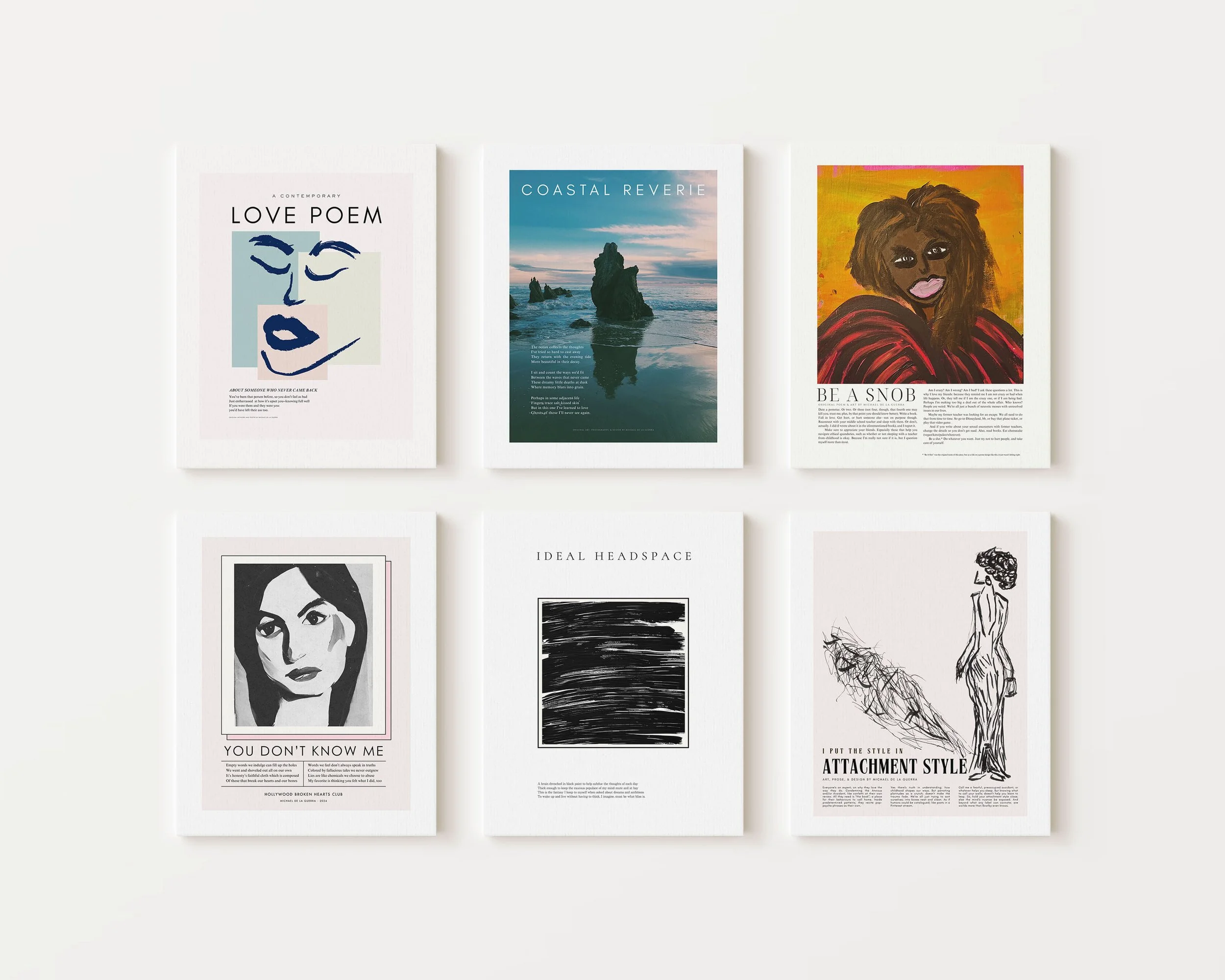
This explains the maniacally distinct romantic pathology smeared all over his poetry. The threads of love, shame, and constant questioning of worth are the electrical wiring under the carriage, though he rarely names it directly. Asked what he resents about being an artist, he answers with unusual precision: "I resent that I've been cursed with the untethered need to create without fear or in pursuit of praise, which exists alongside a desire to be deserving of love."
Make the thing because you cannot not make it.
Hope, quietly, that it earns you something you cannot ask for.
 Pulse check: current works in progress
Two projects own him right now. The first is Tales of Faith & Shame (Threads of Moirai): a narrative poem that alternates between verse and first-person prose, following five friends on a road trip to Ensenada as a single act of infidelity quietly dismantles everything between them. It is an audacious attempt to use prose poetry as a storytelling mechanism, and he is still writing it; he hopes to finish it in time for the Social Tonic Collection, his first complete selection of prose poems.

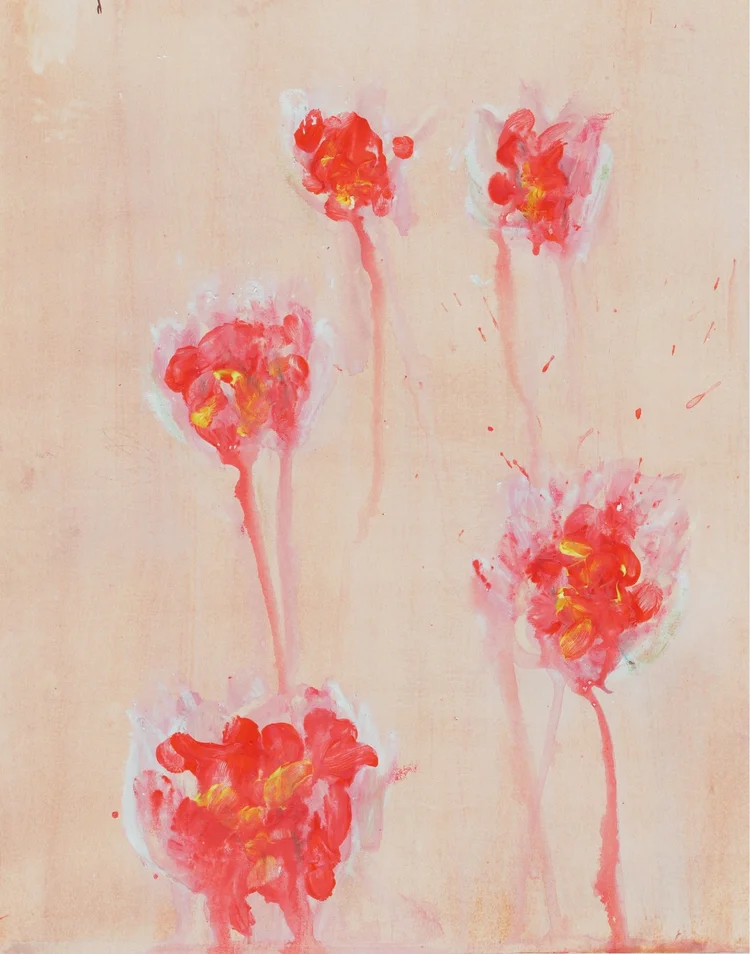
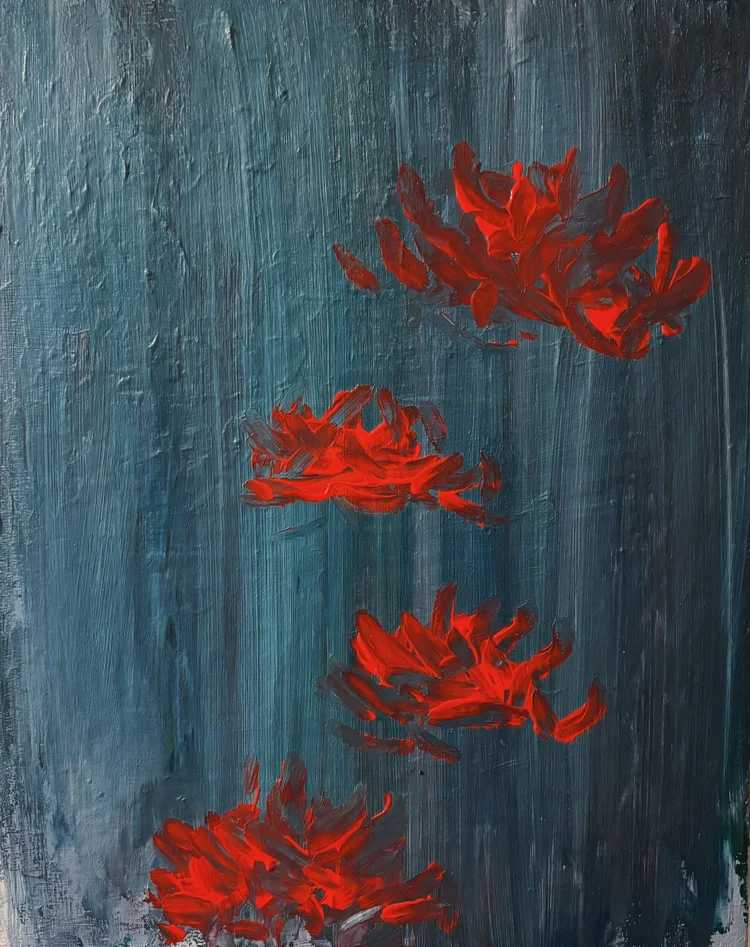
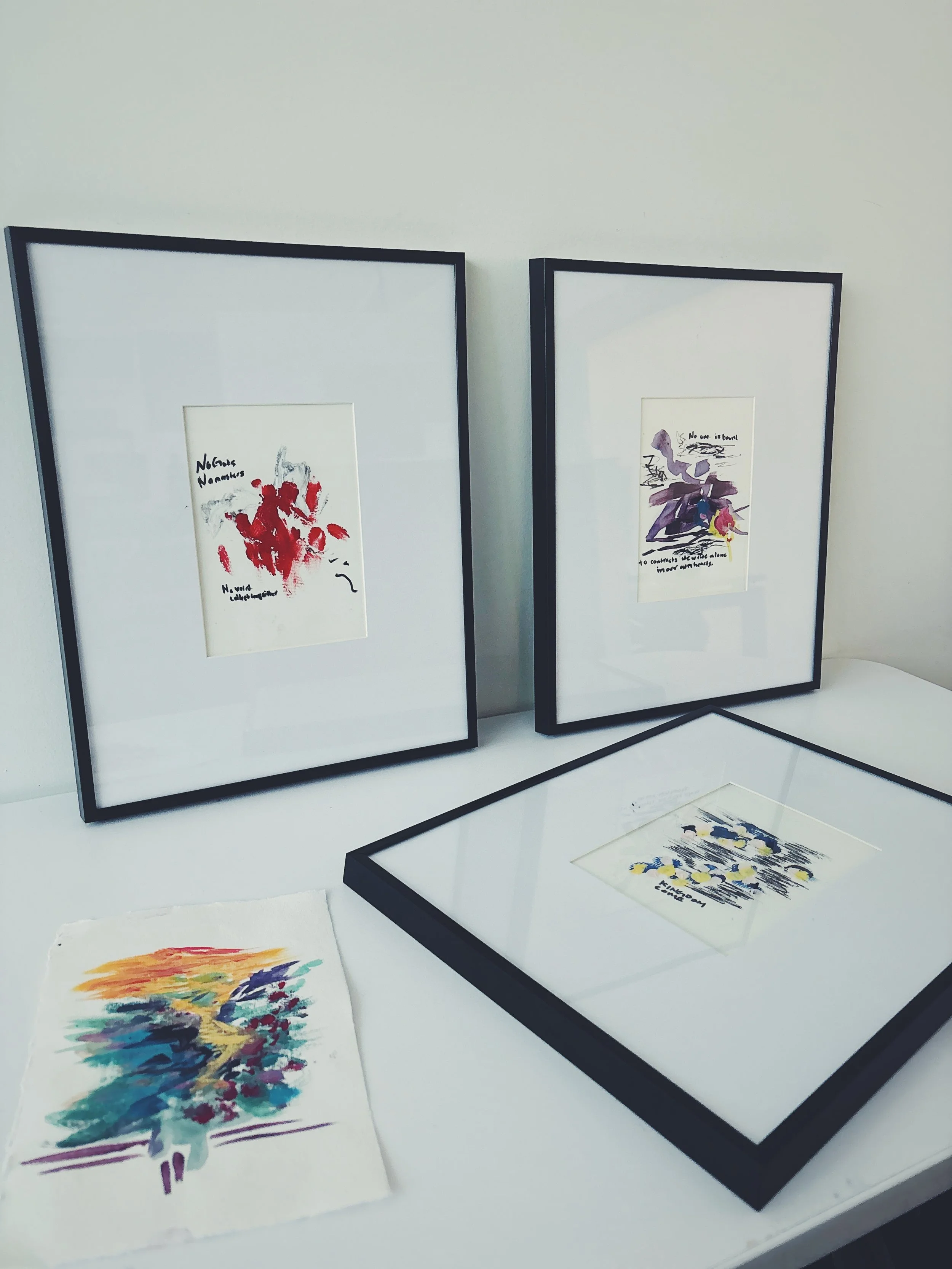
The second is Fili del Velo di Nettare (Threads of the Veil of Nectar): a new body of paintings on larger canvases. The work that preceded it, Atelier Solitaire, was about what you go through alone: four works on paper, contained, inward, sealed. What's opening now is different. The darkness is still the spine, but it's starting to emit rather than contain; what he calls somber radiance, the thing the process produces after you've gone far enough into it alone.
Atelier Solitaire is closed. Fili del Velo di Nettare is beginning.
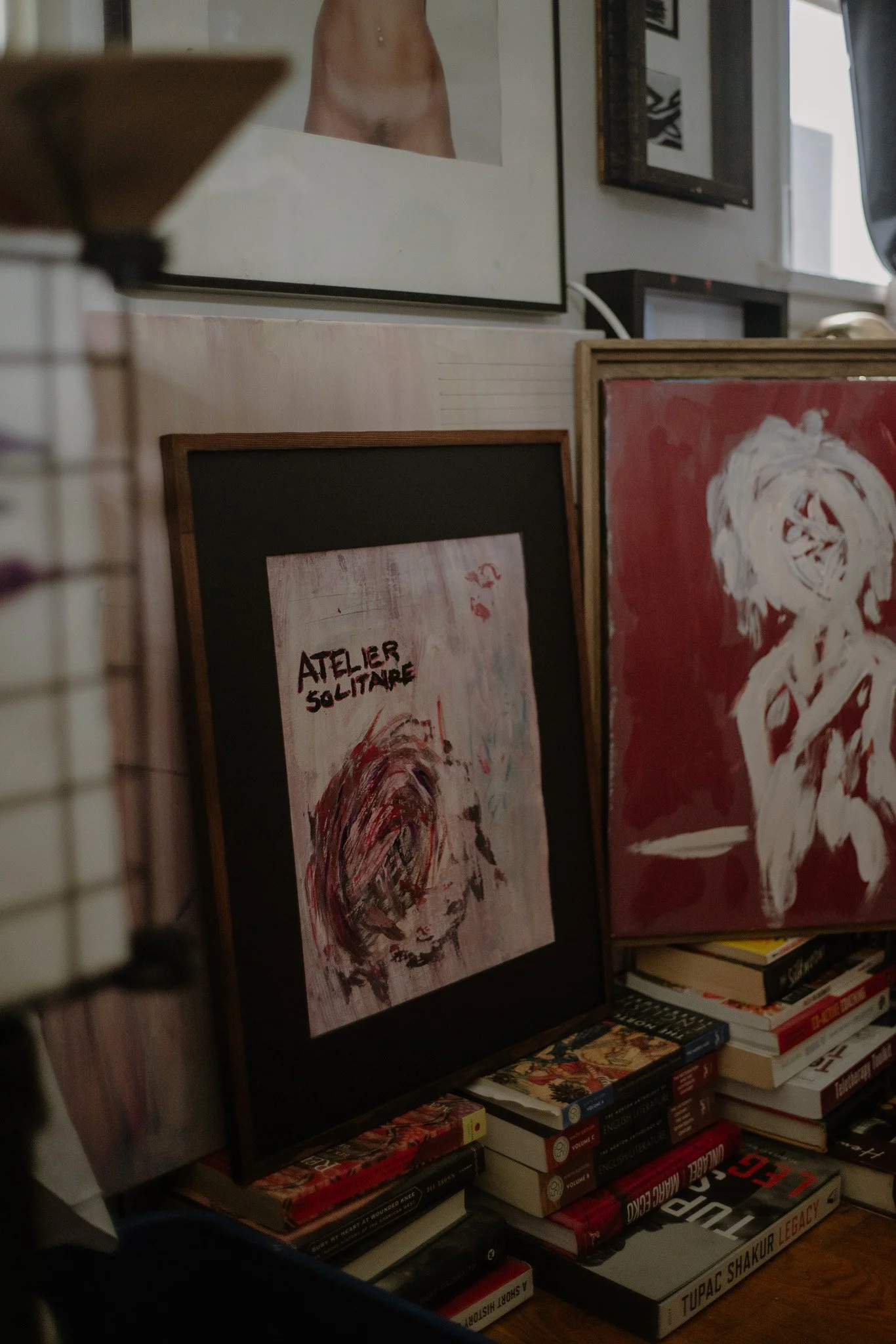
He will also, by his own admission, destroy any painting that starts to go well. Stare at it long enough and something begins to look wrong. He tries to fix it. Most of the time, he pushes it past the point of recovery.
This may be the most honest thing he says. Not the addiction. Not the breakdown. Not the decade of putting words in other people's mouths: the quiet, persistent difficulty of deciding that something finished is enough.
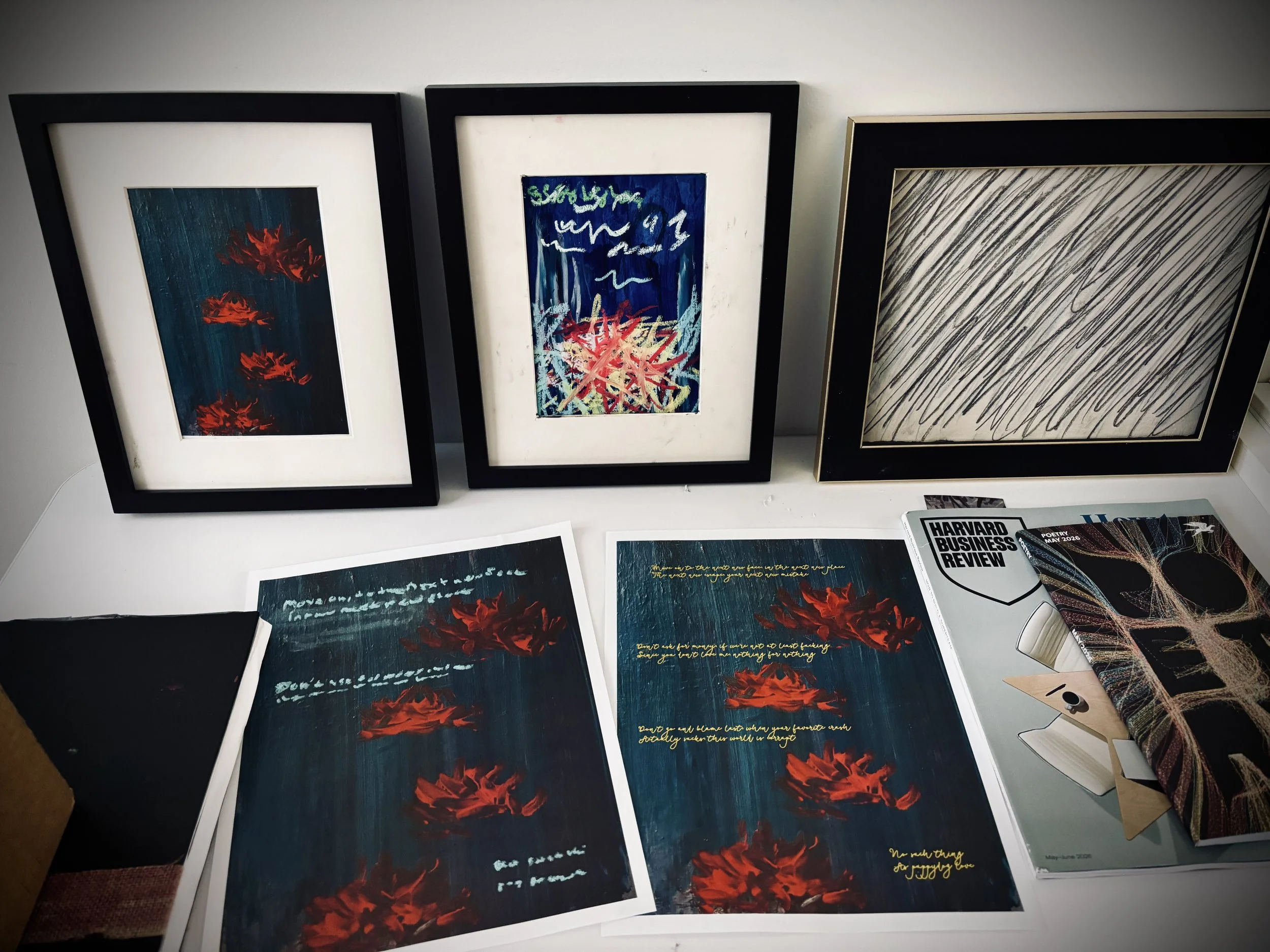
Ask what he wants someone to feel the first time they meet the work and he answers carefully. Gratitude that they slowed down at all. The hope they feel seen. A wish that they think, he hurts like I hurt. Then, almost as an afterthought: "Or maybe, hopefully, you think I'm kinda funny."
Ask what would happen if he stopped making work entirely and he doesn't hesitate.
"I would die of a broken heart."
He says it simply, the way you state a fact about yourself that has long since stopped being dramatic and become merely true. Then he moves on.